
Book Review – Jeanette Greaves – Fight For The Future

2021 Bardale Press
Spoilers
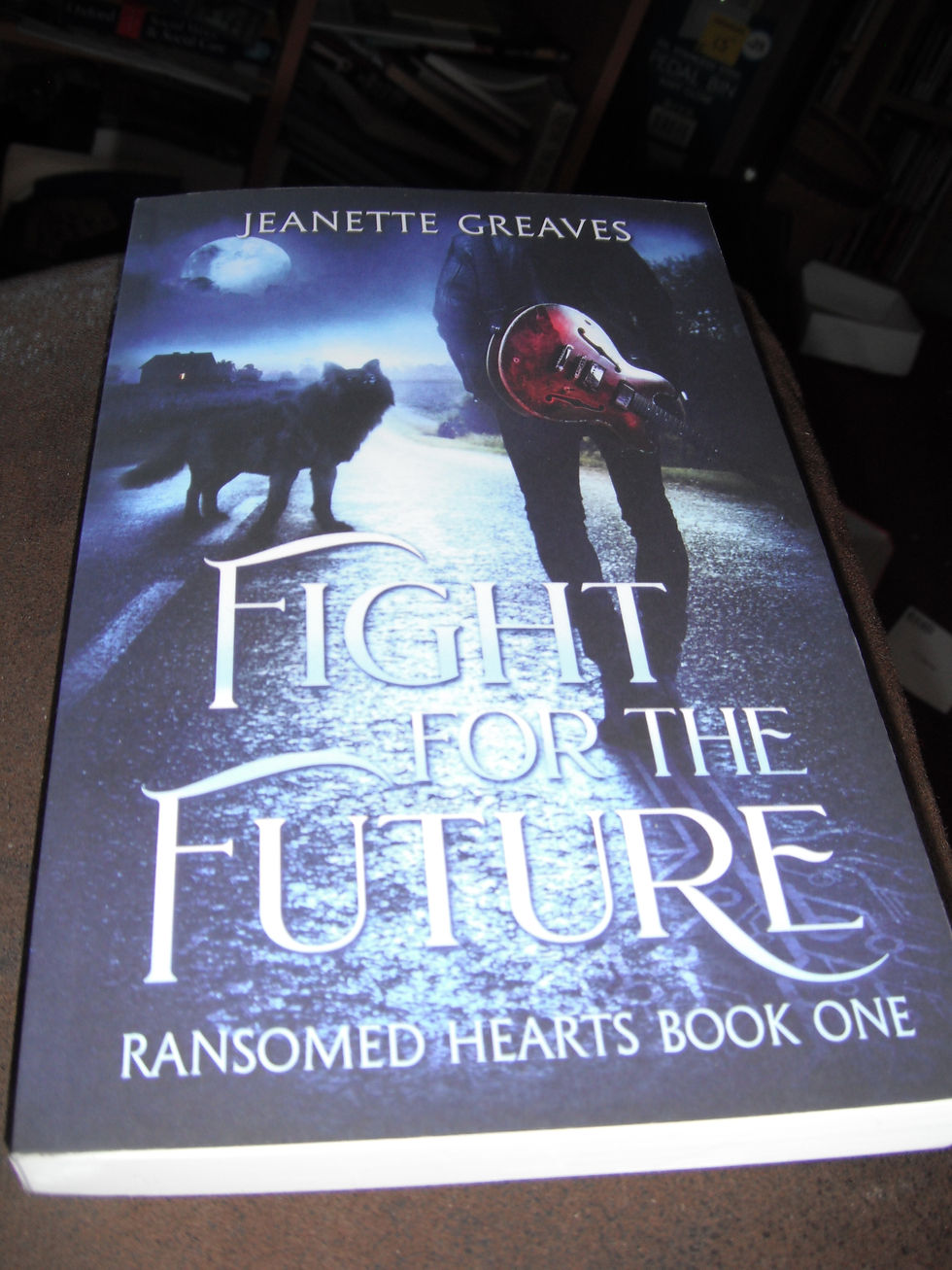
The first of the Ransomed Hearts werewolf quartet, set in a fictional Lancashire town in the early 1960’s, proving to be a disappointing werewolf romance.
Twin brothers, Anthony and Tomas, arrive in Bardale, a fictional, quaint Lancashire farming town, and their ancestral routes. The brothers are musicians, who earn a living through playing in bars, and working on the farm. They are werewolves, seek mates, and hiding from a pack of werewolves who have massacred much of their European family, and seek their destruction too.
As a period piece, irrespective of its supernatural elements, the story works well enough. I do like the twins having to dumb down how talented they are as musicians to play cover versions at village weekend and wedding entertainments. This is the time skiffle groups and the birth of Rock & Roll dominated pop culture. Greaves captures the era very well.
Sadly, the werewolf side of the story spoils all this. The men are not affected by the Full Moon (which is never once even referenced). They are mongrels in a shape-shifting wolf-culture that takes pride in pedigree stock. The wolves can change at will, rather than through compulsion. The protagonists don’t attack or kill people, but like to run wild on the Pennines and kill small animals (they help the useless farm cat that is supposed to take down the farm rats and mice by doing its job for it).
Problems. 1/. The story is several chapters in before it draws reference to the werewolf factors at all, even though it is not going to surprise readers given that the cover and blurb spell out that the story concerns werewolve. 2/. The twins are hiding from pursuit by going to the very town in which the pursuit started. Hardly seems wise.3/. One of the men is spotted when he turns wolf to defend a woman from assault, but her attacker thinks he’s a dog, not a wolf. This has no later consequences. 4. The seek wives, to have werewolf children (they are always born as twins), and though the relationships are by consent, the men don’t tell their partners to be that they are werewolves and the children to be born will also be werewolves. 5/. A farmer knows the history of the original werewolf massacre in the town, and knows the bodies are under his farmhouse. He meets the men, knows what they are, and seems happy for Anthony to marry his daughter, despite the danger of the ‘white wolves’ (the pedigree pure blood pack) attacking the village to kill his daughter too one day. 5/. Years pass between chapters with barely a flicker. The men get married. 6/. Characterisation is very flat and dull. 7/. Little action and even when it takes place we get a tell not show approach. Tomas tells Anthony that he has met a long lost living relative who warns him that the White Wolves are on their trail. Anthony later witnesses their relative killed by the other wolves. 8/. The twins decide to flee the village and the country to save their human families from the war looming with the killer wolves. Though strategically this makes sense, it draws the action away from the Lancashire setting so established in the first three quarters of the book. 9/. The brothers flee to France, and they kill some of the enemy wolves before being attacked by the pack. Tomas appears to die, but Anthony just about survives. He is nursed to health by some farm girls who seem unperturbed by him being a werewolf with other werewolves potentially likely to kill them. 10/ Only in the closing chapters do we get the story from the point of view of Harald, leader of the cult-like White Wolves, a cruel harem keeper with the enslaved wolf-women plotting his downfall. Characterisation here is paper thin. With Anthony surviving and wowing to fight Harald again, the scene is set for book two, but I don’t feel a desire to continue to follow the story.

There is good writing here, as Greaves clearly loves Lancashire and the music/pub chapters are fine, but as a horror story it fails at every turn. Characters just turn up, meet by coincidence, events are teased that never happen, action changes location late on, and we get insights into the main villain (who is just bad for the sake of being bad), only late on, while humans seem utterly unsurprised and unafraid to find proof of werewolves in their midst, with one even happy for one to marry and impregnate his daughter. Credibility takes a holiday for me with this one.
Arthur Chappell


Comments